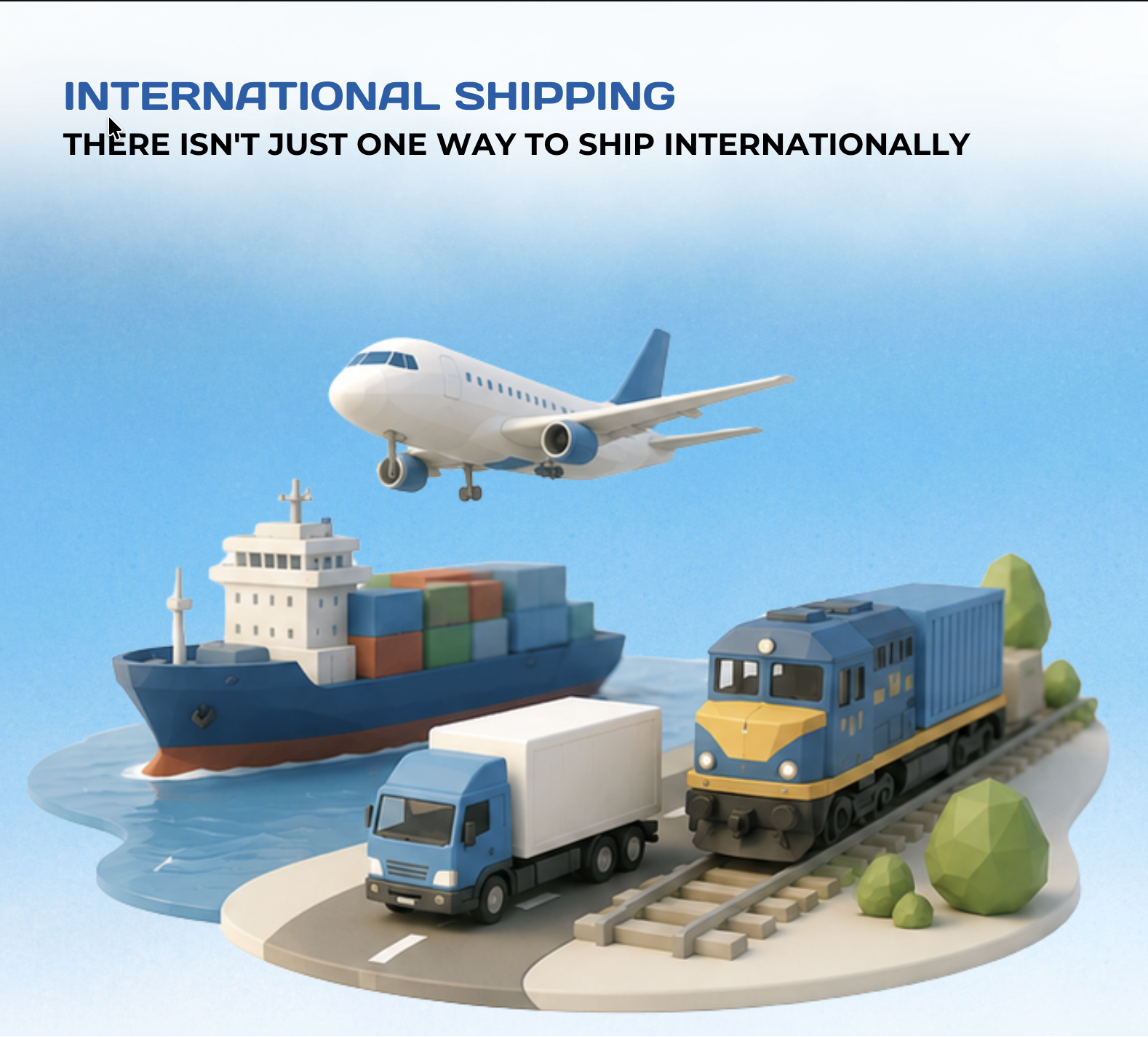
There Isn’t Just One Way To Ship Internationally
When people imagine international shipping, they often picture one container sailing across the ocean from one country to another.
In reality, international logistics can be much more layered and strategic than that.
Many global shipments do not rely on only one mode of transport. A product may travel by truck, rail, sea, air, or specialised transport before it finally reaches the customer.
This is known as multimodal logistics — where different transport methods are combined to move cargo efficiently across countries, regions, and distribution points.
For businesses expanding internationally, choosing the right shipping method is not just about getting products from Point A to Point B. It is about finding the right balance between cost, speed, reliability, product requirements, and market expectations.
One Shipment. Multiple Journeys.
Every shipment has its own route, timeline, and operational requirements.
A product manufactured in Germany might travel through several stages before reaching the final customer:
- Truck
- Rail
- Sea freight
- Truck
Another shipment moving from Malaysia to Central Asia may require a different combination:
An oversized machine may need an even more specialised journey:
- Factory pickup
- Heavy haul trailer
- Port handling
- Vessel transport
- Specialised trailer delivery
This is why international shipping is rarely just “book a container and send it out.”
Each shipment tells a different story. The right transport combination depends on what is being shipped, where it is going, how urgently it is needed, and what infrastructure is available along the route.
Why Multimodal Logistics Matters
Using multiple transport methods can help businesses move cargo more effectively, especially when entering new markets or serving customers across different regions.
Multimodal logistics can help businesses:
- Reduce delivery time
- Lower logistics costs
- Improve flexibility
- Reach inland cities
- Reduce congestion at ports
- Support urgent shipments
- Improve supply chain resilience
Sometimes, the fastest solution is not the cheapest. Sometimes, the cheapest option is not the most practical. And sometimes, using only one transport mode may create delays that could have been avoided with a better route plan.
For example, sea freight may be cost-effective for bulk shipments, while air freight may be useful for urgent spare parts, samples, or high-value items. Road transport may then be needed to complete the final delivery to warehouses, distributors, retailers, or customers.
The goal is not always to choose the cheapest route. The goal is to choose the route that makes the most sense for the business.
Choosing the Right Combination
No two shipments are identical.
The right transport combination depends on several important factors, including:
- Product value
- Delivery urgency
- Cargo size
- Temperature sensitivity
- Dangerous Goods classification
- Destination infrastructure
- Customs requirements
- Warehouse location
- Distributor network
- Last-mile delivery needs
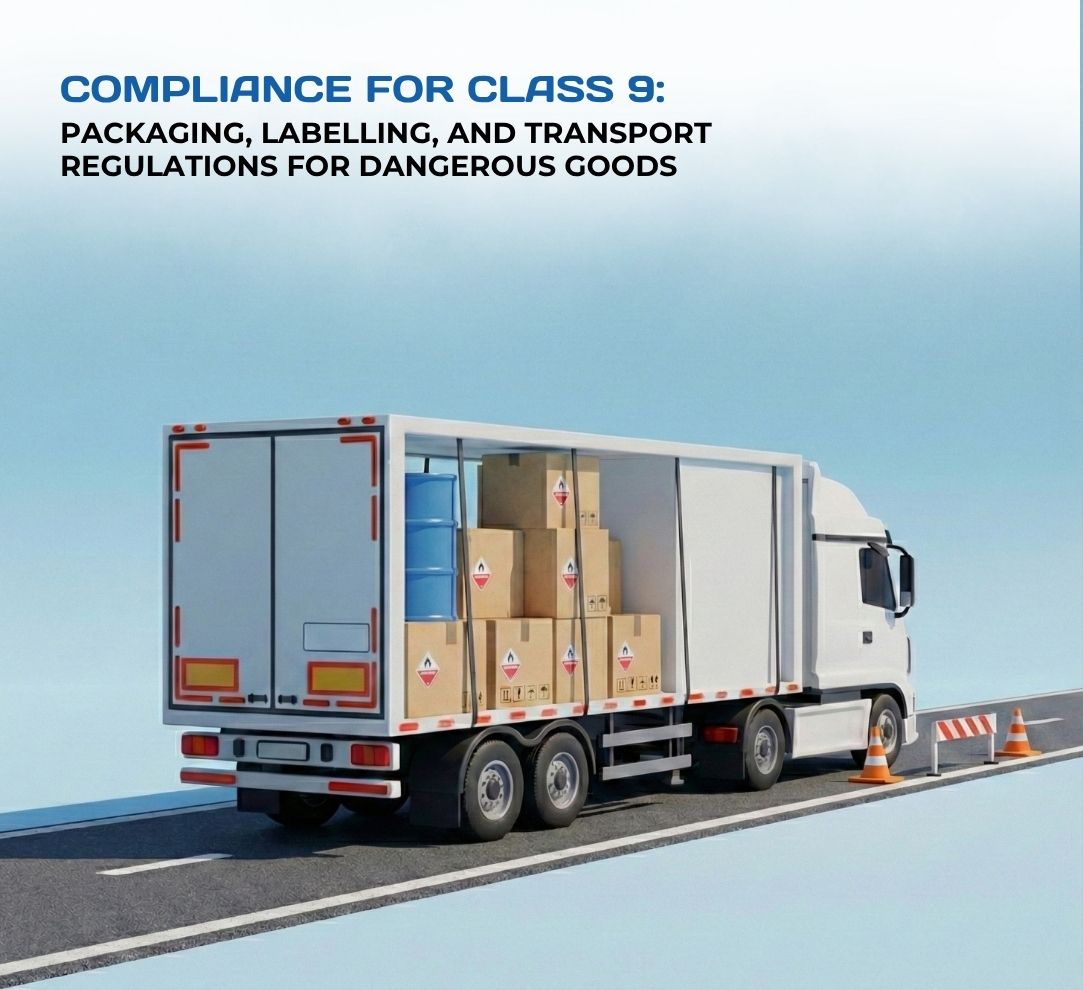
For example, a high-value electronic product may require faster and more secure movement. A temperature-sensitive product may need cold-chain handling throughout the journey. Dangerous Goods may require specific packaging, labelling, documentation, and approved transport arrangements. Oversized cargo may require route surveys, lifting equipment, special permits, and specialised vehicles.
Destination infrastructure also matters. Some countries or inland cities may not have the same port access, airport connectivity, warehouse availability, or road conditions. This affects how the shipment should be planned from the beginning.
A strong logistics strategy looks at the full journey — not just the international freight portion.
Real Example
Imagine an electronics company expanding into Indonesia.
For regular stock replenishment, sea freight may be the most cost-effective option because it allows the company to move larger volumes at a lower cost.
However, when customers need urgent replacement parts, waiting for sea freight may take too long. In this case, air freight can help the company respond faster and maintain customer confidence.
Once the products arrive in Indonesia, local trucking is still needed to move the goods from the port or airport to warehouses, distributors, service centres, retailers, or customers across different regions.
In this situation, using only one transport mode may actually slow the business down.
A smarter logistics setup may combine sea freight for planned inventory, air freight for urgent parts, and road transport for local distribution.
This gives the business more flexibility, better response time, and a stronger market entry setup.
Alien Logistics Builds End-to-End Supply Chains
At Alien Logistics, we do not simply arrange shipping.
We help businesses design logistics solutions that support the full movement of goods across borders, from origin to destination.
This may include:
- Sea freight
- Air freight
- Road transport
- Customs clearance
- Warehousing
- Distribution
- Special cargo handling
- Cold-chain support
- Dangerous Goods logistics
- Oversized cargo planning
Because international expansion is not only about choosing one shipping method.
It is about building a logistics system that can support your product, your distributor, your customers, and your long-term market growth.
With the right multimodal logistics strategy, businesses can move products more efficiently, manage costs better, improve delivery reliability, and respond faster to market needs.
Before choosing a shipping mode, study the full journey.
Before sending the cargo, understand the destination.
Before expanding into a new market, build a supply chain that can support the opportunity.
That is how businesses move smarter across international borders.
Next article: Market Entry Isn’t Just Logistics — It’s Culture Too.