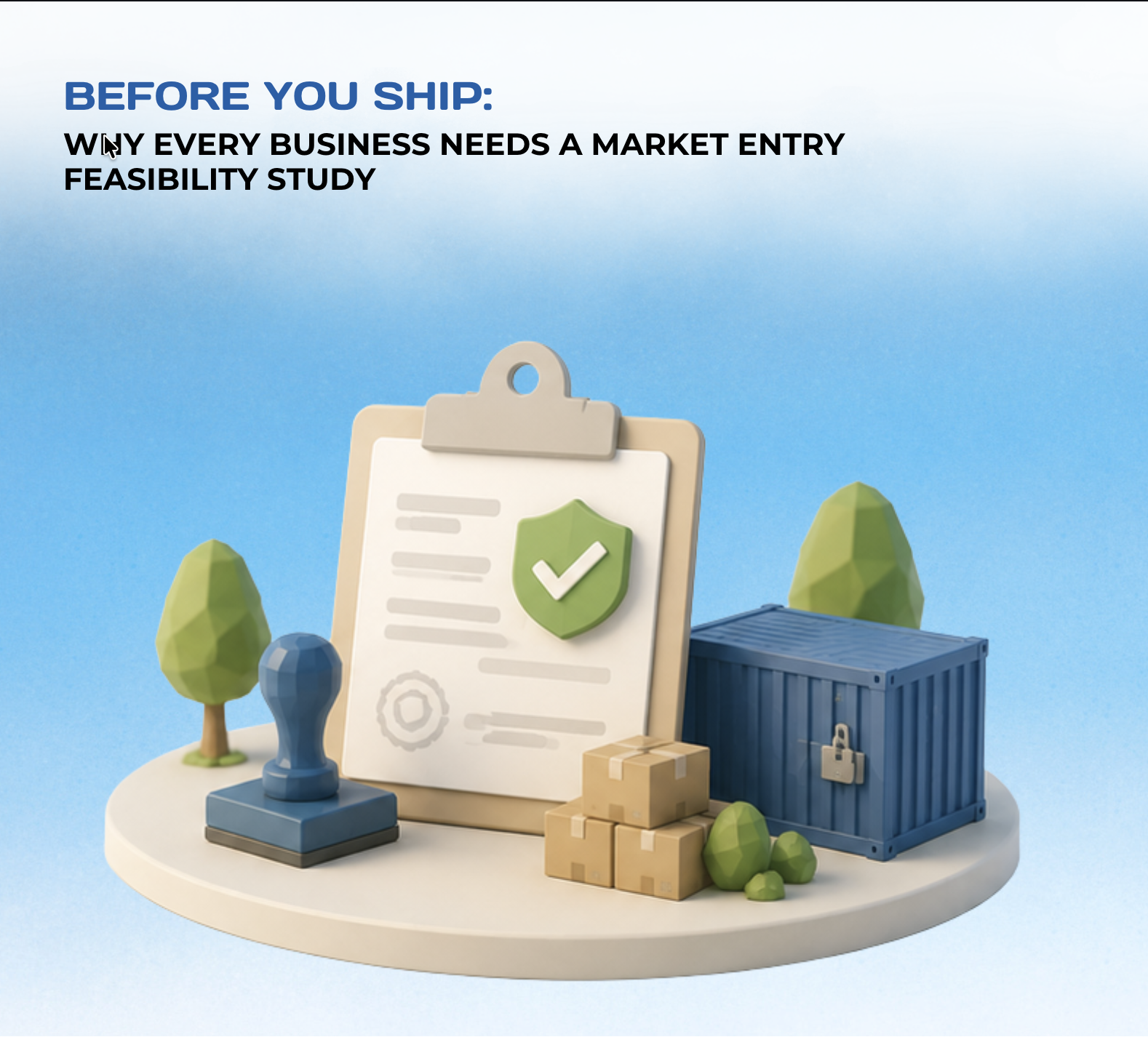
Every Business Needs a Market Entry Logistics Feasibility Study
You are ready to expand into a new country.
A potential distributor is interested.
The product has market potential.
The first shipment feels like the next natural step.
But before the goods leave your warehouse, there is one important question every business should ask:
Is the logistics setup ready to support this new market?
Many businesses think overseas expansion begins with checking freight rates and finding someone to sell the product locally. In reality, appointing a distributor is only one part of market entry.
The bigger question is whether the product can be imported, stored, handled, and distributed properly in that country.
Because sometimes, the issue is not demand.
It is the missing import permit.
The unsuitable warehouse.
The distributor located too far from the main customer base.
The product stuck at port because documentation was incomplete.
The local delivery cost that makes the product less competitive.
This is why businesses need a market entry logistics feasibility study before they ship.
What Is a Market Entry Logistics Feasibility Study?
A market entry logistics feasibility study evaluates whether your product can enter and move within a new market efficiently, compliantly, and profitably.
Instead of only asking, “Can we export there?”, businesses should be asking:
Can this product be imported into the country smoothly?
What permits, approvals, or product documents are needed before shipment?
Which port, airport, or entry point makes the most sense?
Where should the goods be stored after arrival?
Is the distributor’s warehouse suitable for this product?
How will the goods move from warehouse to customer?
Will the total logistics cost still support the selling price?
These questions help businesses understand the actual setup required before committing to a distributor, shipment schedule, or market launch plan.
Why Distributorship Needs Logistics Planning
A distributor can help open doors in a new market, but the logistics system still needs to be properly planned.
The distributor may understand the customers, retailers, or sales channels. However, that does not always mean the storage, import process, delivery routes, or fulfilment structure is ready.
For example, a distributor may be based in one city, while most of the target customers are located in another region. This can increase domestic transport costs and slow down delivery.
Another distributor may have general warehouse space, but not the right facilities for temperature-sensitive goods, Dangerous Goods, oversized cargo, or fast-moving e-commerce stock.
In some cases, the product may require import permits or approvals before it can enter the country. If this is only discovered after the shipment has been arranged, the cargo may be delayed at port, creating additional storage charges and operational pressure.
This is why the logistics setup should be reviewed before the first shipment moves.
More Than Just Warehousing
Warehousing is not simply about finding available space.
Different products require different storage and handling arrangements. In Malaysia, for example, the logistics requirements may vary depending on the product category, import regulations, safety requirements, and distribution model.
Consumer products may need regional distribution centres to support delivery to retailers, wholesalers, or online customers.
Food products may require proper storage conditions, hygiene standards, expiry-date management, and temperature control depending on the product type.
Pharmaceuticals, healthcare products, and sensitive goods may require cold-chain handling, controlled storage environments, and proper documentation.
Dangerous Goods may require licensed storage facilities, correct labelling, segregation requirements, and trained handling procedures.
Oversized cargo may need suitable loading bays, lifting equipment, transport permits, and careful route planning.
Fashion, retail, and e-commerce products may need fulfilment centres that can manage picking, packing, returns, seasonal inventory, and stock visibility.
Each product category comes with its own logistics requirements. The right warehouse is not just a place to store goods. It is part of the market entry strategy.
Questions Every Business Should Ask Before Shipping
Before entering a new market, businesses should ask practical logistics questions early.
Where are the main customers located?
Is the distributor close enough to serve them efficiently?
Which port or airport should be used for import?
What permits or product approvals are required before shipment?
What documents are needed for customs clearance?
How long does local clearance usually take for this product category?
Can the warehouse support the product’s storage requirements?
How much inventory should be stored locally?
Is local warehousing more cost-effective than direct shipping?
How will last-mile delivery be handled?
Are there public holidays, peak seasons, or customs closure periods that may affect shipment timing?
These questions help businesses avoid costly assumptions and plan with greater confidence.
Real-Life Example
Imagine a company exporting food products into a new Southeast Asian market.
The distributor is ready.
The customers are interested.
The shipment is arranged.
But just before the goods move, the team realises that the product requires specific import permits and supporting documents before it can enter the country.
The shipment is delayed.
The launch timeline is affected.
The distributor becomes frustrated.
Storage and handling costs start to increase.
Customers who were expecting stock now have to wait.
The issue was not the product.
The issue was not the distributor.
The issue was that the logistics setup was not fully studied before the shipment was planned.
A market entry logistics feasibility study would have identified the import permit requirements, customs process, documentation needs, warehouse suitability, and distribution route before the first shipment was arranged.
Different Countries Work Differently
Every country has its own way of managing imports, customs, warehousing, transport, and distribution.
What works in Malaysia may not work the same way in Indonesia, Thailand, Vietnam, Singapore, or the Middle East.
Some countries may require product registration before import.
Some may have stricter customs documentation requirements.
Some may have limited cold-chain facilities outside major cities.
Some may have longer inland delivery routes that affect cost and timing.
Some may have public holidays or seasonal closures that need to be planned around.
This is why market entry logistics planning must be country-specific.
A general export plan is not enough. Businesses need to understand how the target country actually operates, especially when working through a distributor.
Alien Logistics: Planning Before Moving
At Alien Logistics, we believe logistics begins long before cargo starts moving.
For businesses entering a new market, we help evaluate the logistics setup needed to support successful distribution.
This includes import readiness, permit and documentation preparation, distributor location planning, warehousing strategy, cold-chain availability, Dangerous Goods storage, oversized cargo requirements, customs process planning, last-mile delivery, and regional distribution opportunities.
Because successful market entry is not only about moving products into another country.
It is about making sure the right logistics structure is in place before the first shipment leaves the warehouse.
When the setup is planned properly, businesses can support their distributors better, reduce avoidable delays, manage costs more effectively, and enter new markets with greater confidence.
Before you ship, study the market.
Before you appoint a distributor, study the logistics.
Before you expand, make sure the setup can support the opportunity.
Next in the series: Understanding Import Permits & Customs Requirements Before Entering a New Market.